Satellite Crop Monitoring: How Agrograph Turns Images into Actionable Intelligence
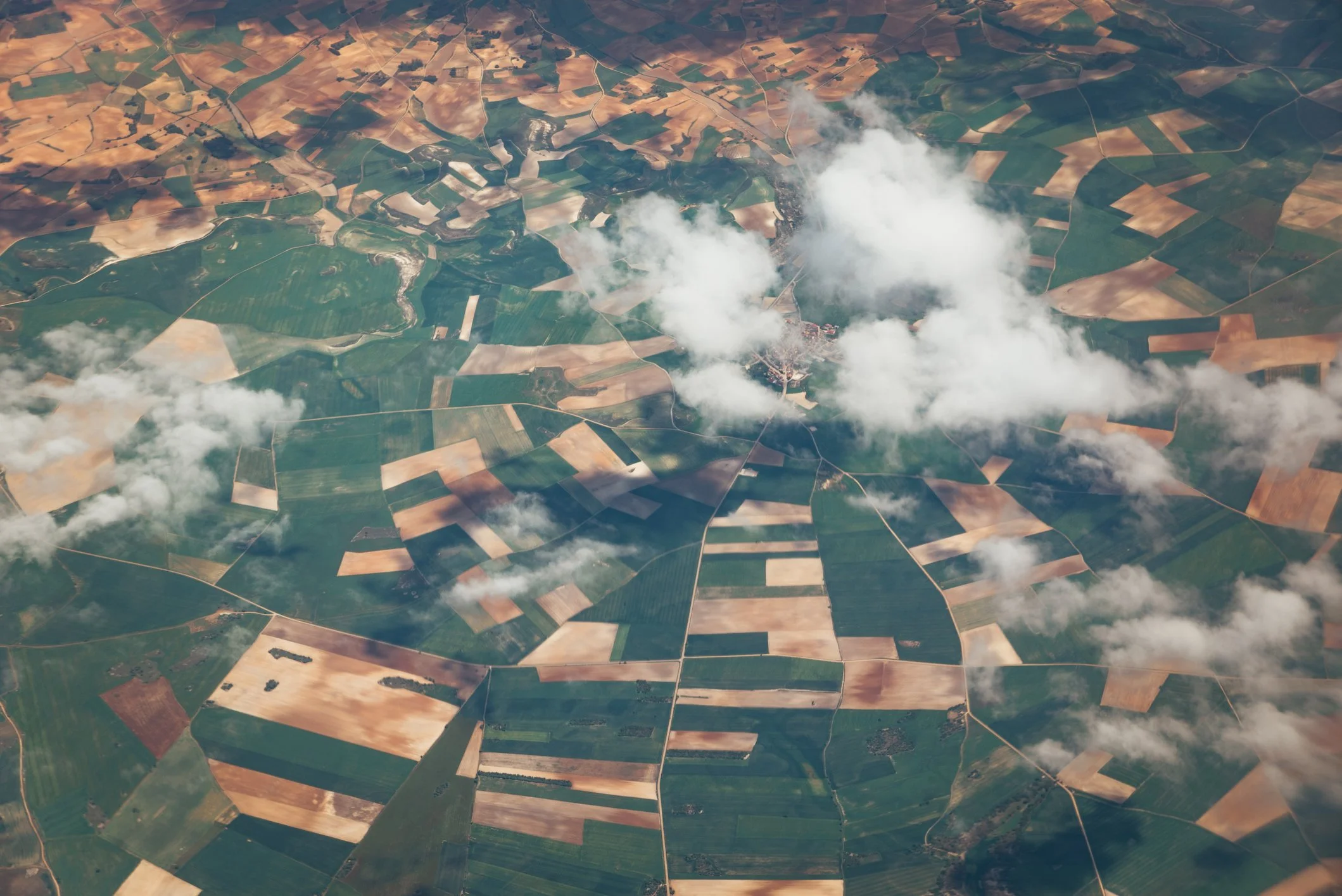
Agrograph uses satellite imagery like this one plus time-series analysis, and machine learning to turn crop monitoring data into actionable agricultural intelligence.
Agribusiness professionals are sometimes skeptical about the usefulness of satellite crop monitoring, and for good reason.
Over the past few decades, solutions claiming to transform agriculture with satellite imagery and vegetation indices like the Normalized Difference Vegetation Index (NDVI) have exploded. But in practice, many of these tools don’t live up to the hype. End-users complain about the accuracy of the indicators they track, the overwhelming amounts of data they produce, and most importantly, the gap between that data and the actionable insights they’re looking for.
In many cases satellite images confirm what is observable from the ground, but can’t answer the questions that matter most for agricultural decisions, such as:
How will last week’s hail storm affect yields across the county?
Will this heat wave reduce yields by 5 percent, 20 percent, or destroy the crop entirely?
If it rains two inches next week, what percentage of fields in this geographical region will be impossible to plant this season?
To answer these questions, you need to be able to translate satellite observations into reliable predictions about agricultural outcomes.
At Agrograph, our team has spent more than two decades developing machine learning models designed specifically to make that translation possible.
Understanding the Challenges of Satellite Crop Monitoring
Converting satellite-derived observations into reliable insights about agricultural outcomes is difficult because of technical challenges inherent to remote sensing and agriculture.
Satellite Observations Have Physical Constraints
The satellites that are used for remote agricultural monitoring don’t observe the same region continuously the way some weather satellites do. As they orbit the earth they capture new images of the same spot at regular intervals, and their optical sensors can’t see through clouds. In humid growing regions or during monsoon seasons, cloud cover can block optical observations for days or even weeks.
There are also tradeoffs between spatial resolution and cost. Satellites that capture very high-resolution imagery cover smaller geographic areas, and their data is significantly more expensive to access. For agricultural monitoring, these tradeoffs determine whether a system can observe individual fields in fine detail or focus on broader regional patterns by using the lower resolution data that’s publicly available.
Crop Identification Is a Necessary First Step
Before satellite agriculture monitoring systems can estimate yields or detect damage, they must first determine what crop is growing in each field.
Crop identification from satellite imagery is challenging because many crops follow similar growth patterns during early stages of development. Corn and soybeans, for example, can appear nearly identical in satellite imagery during the first weeks after emergence.
Accurate crop identification is the foundation for all other insights. If your monitoring system mistakenly labels a soybean field as corn, the yield models applied to that field will produce inaccurate estimates.
A Single Image or Index Can’t Explain Crop Performance
Satellite images capture a snapshot of crop conditions at a single point in time, but in order to accurately predict outcomes like yield, you need to observe crop development over multiple growing seasons.
Changes in crop “greenness,” as measured by the NDVI, can be a leading indicator of pest outbreaks or disease. But those same changes can also reflect a week of cloudy conditions that the crop will easily recover from.
Without time-series data that tracks crop development across many seasons, it’s hard to say whether a change in vegetation indices represents a short-term fluctuation or the start of a serious yield loss.
Ground-Truth Data Is Limited
Machine learning models can connect satellite observations with real agricultural outcomes, but only if they are trained on vast amounts of labeled data that describes those outcomes.
There’s no shortage of satellite-derived images. Publicly available archives from programs such as NASA’s Landsat satellites and the European Space Agency’s Sentinel constellation can provide decades of observations of individual fields. The challenge lies in obtaining reliable ground-truth data that records what actually happened in those fields.
In many agricultural regions, yield data is only available as aggregated statistics such as county-level surveys. These averages hide large differences between individual farms. When a model is trained on aggregated yield statistics, it becomes difficult to learn how specific weather events or crop conditions affect yields at the field level.
For example, if a drought reduces yields by 15 percent across a county on average, some farms may have lost almost nothing while others may have lost most of their crop. Aggregated statistics make it hard for models to capture that variability.
This limitation directly affects applications such as crop insurance or agricultural finance, where decisions depend on estimating production outcomes for specific fields rather than regional averages.
Agriculture Is Highly Variable
Agricultural outcomes are influenced by many factors that are not directly visible from space. Two neighboring fields growing the same crop may produce very different yields due to differences in soil conditions, irrigation practices, fertilizer application, seed varieties, or planting dates.
Satellite imagery captures the visual result of these factors but does not automatically reveal their causes. A stressed vegetation signal could reflect drought conditions, nutrient deficiencies, pest pressure, or simply a field that was planted later than its neighbors.
For farmers and agribusiness teams trying to diagnose problems, this ambiguity can lead to a lot of noise. Every observation requires additional analysis to determine if there’s a serious production risk or if the difference can be explained by routine factors.
Remote Sensing Has Traditionally Focused on Plant Vigor Instead of Yield
Many satellite monitoring tools rely on vegetation indices such as NDVI to estimate plant vigor. These indices measure how plants reflect light, which provides an indirect signal about plant health.
However, plant vigor is poorly correlated with the outcomes that agricultural decision-makers care about. A crop may appear healthy according to its NDVI values, even if it has experienced heat stress during pollination, which will produce lower yields.
Farmers, insurers, and agribusiness teams don’t really care whether vegetation indices are increasing or decreasing. They want to know how crop conditions will affect production, risk exposure, and revenue.
Translating satellite observations into reliable predictions about those outcomes requires models that connect imagery with historical yield data and agronomic knowledge.
Agrograph Overcomes the Challenges of Satellite Crop Monitoring to Offer Usable Insights
Agrograph’s models were designed specifically to address the technical limitations that have prevented many satellite monitoring systems from delivering reliable agricultural insights. By combining long satellite imagery archives with human-guided machine learning and decades of agricultural expertise, Agrograph converts satellite observations into predictions about crop production and risk.
Working Within the Limits of Satellite Observations
Satellite imagery will always face physical constraints such as cloud cover, revisit frequency, and the trade-off between spatial resolution and coverage.
Agrograph addresses these constraints by integrating imagery from multiple satellite programs, including NASA’s Landsat satellites, the European Space Agency’s Sentinel constellation, and MODIS imagery archives. These programs enable us to monitor more than 800 million hectares of farmland globally at approximately 10-meter spatial resolution with five-day revisit frequency, with historical records that extend back more than two decades. When we need higher resolution images, we can also access imagery from commercial satellite operators, such as our partner Planet Labs.
Rather than relying on a single satellite pass, Agrograph models analyze large collections of observations across the growing season. If one observation is obscured by clouds, additional images from other dates or satellite sources help document the crop’s development pattern. This approach reduces the risk that important events such as flooding or delayed emergence go undetected.
Identifying and Monitoring Crops with Time Series Data
Accurate crop identification is the foundation of any agricultural monitoring system. Yield models, risk assessments, and management insights all depend on knowing which crop is growing in each field.
Agrograph has developed highly reliable crop classification models for major row crops including, but not limited to:
corn
soybean
wheat
cotton
rice
sunflower
canola
sorghum
Each crop follows a distinctive development curve over the course of a growing season. By analyzing seasonal growth patterns captured in time-series satellite imagery, we can distinguish crops that appear visually similar in early growth stages.
Our focus on time-series analysis also allows us to track critical crop development signals, which helps us answer practical questions such as whether a temporary NDVI dip reflects a passing weather event or a development pattern that historically leads to reduced yields.
Augmenting Ground-Truth Data with Human-Guided Machine Learning
Agriculture is one of the hardest domains to model because detailed field-level yield data is often limited, noisy, and highly context-dependent — what works in an Iowa corn field doesn’t serve a Texas dryland operation.
Agrograph addresses this through human-guided machine learning. With the insights gained from more than 25 years of agricultural research, we guide the training process by identifying which satellite signals correspond to known crop development patterns.
Through this effort, we’ve built a proprietary training database of yield data from more than 85,000 unique fields over 24 growing seasons, representing more than 12 million acres of cropland. The combination of our unmatched training data, cross-disciplinary expertise, and expert-in-the-loop modeling is what makes Agrograph's field-level estimates consistently actionable where others remain approximate.
Accounting for Agricultural Variability
To produce accurate predictions, a satellite crop monitoring tool has to account for variations in agricultural systems. Differences in soil conditions, irrigation practices, fertilizer application, or planting dates can cause two neighboring fields growing the same crop to produce very different yields.
Agrograph models account for this variability by analyzing historical performance at the field level across multiple seasons. By observing how a field has responded to different weather conditions over time, the models learn the typical production behavior of that location.
This historical context allows the system to identify when unusual crop signals are likely caused by external factors such as drought, flooding, or heat stress.
Predicting Outcomes Instead of Measuring Plant Vigor
Vegetation indices such as NDVI measure plant vigor, but they don’t directly measure agricultural outcomes like yield.
Agrograph models address this gap by training on historical yield outcomes paired with corresponding satellite imagery. This allows the system to estimate how crop conditions observed from space are likely to affect production during the current season.
This means when satellite imagery detects flooded fields or severe vegetation stress, Agrograph models can estimate the expected impact on crop yields rather than simply flagging the condition.
This capability allows users to answer questions that traditional monitoring tools struggle with:
How much yield loss is likely from a heat wave or flooding event?
Which fields are most at risk of production losses this season?
How severe is the impact of current crop stress compared with past seasons?
By connecting satellite observations to production outcomes, Agrograph turns earth observation data into practical agricultural intelligence.
Take a Second Look at Satellite Agriculture Monitoring
Satellite crop monitoring has promised to transform agriculture for decades, but many early tools struggled to deliver reliable insights. Now, Agrograph’s combination of time-series analysis, agronomic expertise, and historical yield data offers capabilities that were not possible even a few years ago.
By analyzing decades of satellite imagery alongside historical crop outcomes, Agrograph moves beyond identifying crop conditions to estimating how those conditions are likely to affect production. This makes it possible to answer questions that earlier satellite monitoring tools could not reliably address—such as how much yield loss a heat wave may cause, which flooded fields are likely to recover, or how planting delays will affect production later in the season.
Contact Agrograph to learn how satellite imagery can help you better predict crop outcomes, assess risk, and monitor agricultural production across your regions of interest